


Research & Insights
Finch Capital publishes research on critical technology for Europe's regulated industries and functions
8 Trends Shaping Digital Health
With healthcare systems around Europe coming under the microscope, digital health innovations are reshaping how we approach patient care and medical services.
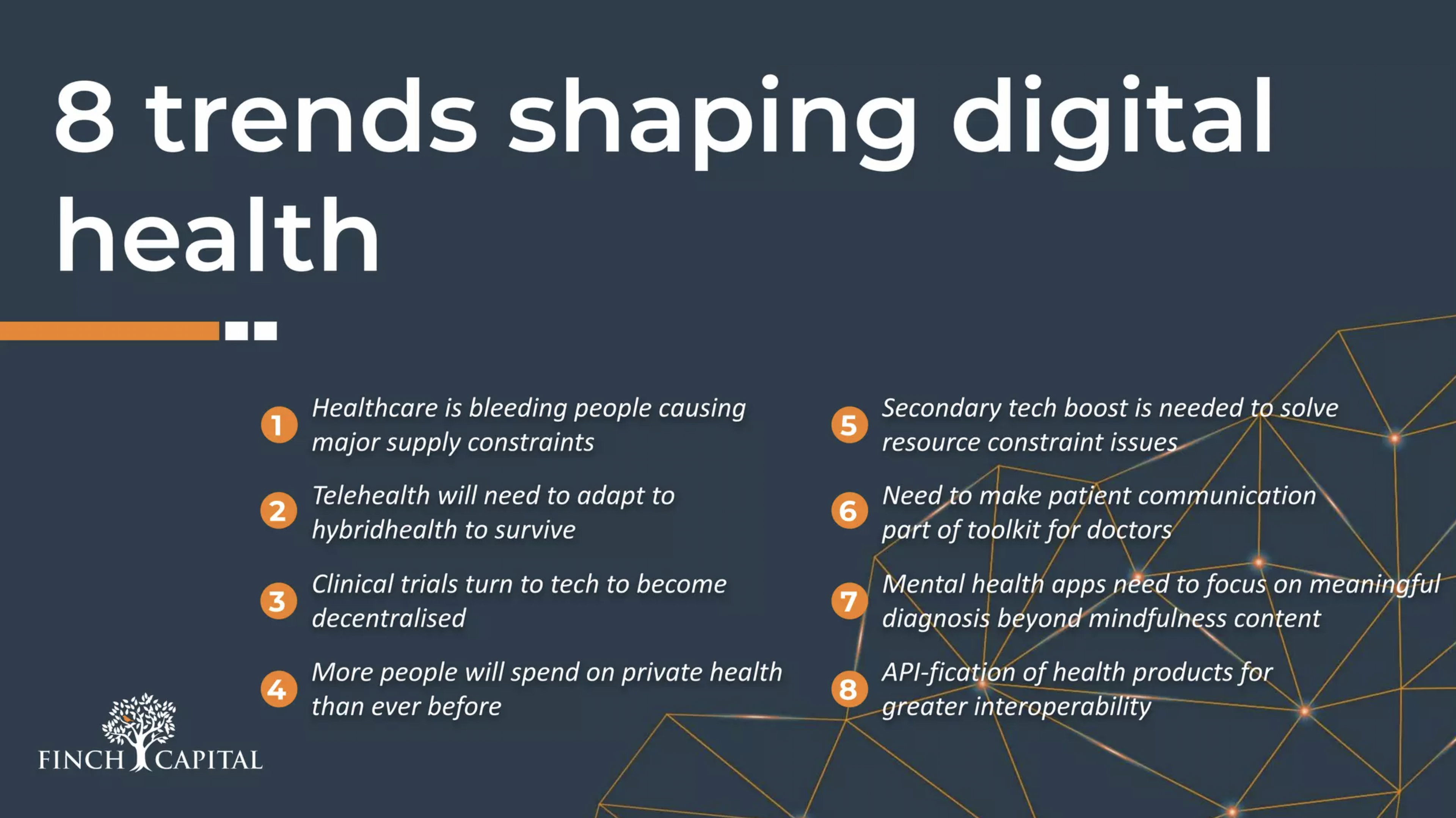
European healthcare systems face unprecedented challenges, from aging populations to resource constraints. Digital health technologies are emerging as critical solutions, transforming how healthcare is delivered, accessed, and experienced across the continent.
The Eight Key Trends
1. AI-Powered Diagnostics
Artificial intelligence is revolutionizing medical diagnostics, with machine learning algorithms increasingly capable of identifying diseases from medical imaging, pathology samples, and patient data with accuracy matching or exceeding human specialists.
2. Personalized Medicine Platforms
Digital platforms are enabling personalized treatment approaches based on individual genetic profiles, lifestyle factors, and medical history, moving healthcare from a one-size-fits-all model to targeted therapeutic interventions.
3. Remote Patient Monitoring
Connected devices and wearable technologies are enabling continuous monitoring of patient health metrics, allowing for early intervention and reducing the need for frequent in-person visits, particularly for chronic condition management.
4. Digital Therapeutics
Evidence-based software applications are being developed to treat medical conditions directly, offering therapeutic interventions through digital means, particularly effective in mental health and behavioral modification applications.
5. Integrated Care Coordination
Digital platforms are breaking down silos between different healthcare providers, enabling seamless coordination of care across hospitals, clinics, pharmacies, and home care services.
6. Patient Empowerment Tools
Mobile applications and web platforms are empowering patients to take active roles in managing their health, from medication adherence tracking to symptom monitoring and direct communication with healthcare providers.
7. Data-Driven Population Health
Big data analytics and population health management tools are enabling healthcare systems to identify trends, predict outbreaks, and optimize resource allocation based on comprehensive health data analysis.
8. Blockchain for Health Records
Blockchain technology is emerging as a solution for secure, interoperable health record management, giving patients control over their medical data while enabling seamless sharing between authorized healthcare providers.
Implementation Challenges
While these trends show tremendous promise, implementation faces challenges including regulatory compliance, data privacy concerns, integration with existing systems, and the need for healthcare professional training and adoption.
The Path Forward
Success in digital health transformation requires collaboration between technology innovators, healthcare providers, regulators, and patients. The trends identified represent opportunities to create more efficient, effective, and accessible healthcare systems across Europe.